
Table of Contents
Elevator Safety Inspection in Hyderabad Buildings | 2026 Audit
As the skyline of Hitech City, Gachibowli, and Madhapur continues its vertical expansion, elevator systems have transitioned from modern conveniences to foundational building infrastructure. However, with thousands of daily commuting cycles comes a critical, legally mandated responsibility: ensuring passenger security through a formal elevator safety inspection in Hyderabad buildings. In 2026, building management is operating under unprecedented regulatory scrutiny. Following explicit ultimatums from the Honorable Telangana High Court to enforce stringent urban safety guidelines, the state has dramatically tightened parameters for vertical transit compliance. Property managers, corporate developers, and Residential Welfare Associations (RWAs) can no longer treat lift upkeep as an optional or reactive chore. A certified technical audit is now a strict pre-requisite for keeping your building legally occupied and properly insured. At Exfol Friends Pvt Ltd, based in IDA Jeedimetla, we provide complete engineering support, structured pre-inspection audits, and full administrative coordination to help your property secure its official regulatory credentials seamlessly.
Quick Answer: What is an Elevator Safety Inspection?
An elevator safety inspection in Hyderabad buildings is an official, comprehensive technical assessment designed to confirm full alignment with the statutory Telangana Lifts framework and Bureau of Indian Standards (BIS) IS 14665 codes. The inspection requires physical, multi-point stress testing of mechanical overspeed governors, emergency cabin brakes, and electrical door safety interlocks. Passing this audit is mandatory for a building to receive or renew its formal “License to Run” issued by the state’s Chief Electrical Inspectorate (CEIG).
The Legal Imperative: High Court Directives & State Regulation
The regulatory landscape surrounding vertical transportation in Telangana has undergone a major transformation. For years, legal loopholes allowed property owners to bypass formal lift registrations. However, following a series of tragic, preventable elevator mishaps across high-rise residential complexes and industrial zones, public interest litigations (PILs) led to strict judicial interventions.
The Telangana High Court has demanded absolute accountability from state administrative divisions and building operators alike. Executive instructions now bridge any past legislative gaps, granting regulatory inspectors the clear authority to inspect, fine, and immediately seal any non-compliant elevator setup. If you run a commercial workspace or an apartment complex in areas like Kukatpally or Secunderabad without a documented, verified fitness certificate, your property is exposed to severe liabilities. Under current statutes, individual building owners or elected RWA management members face direct prosecution and heavy financial penalties if an accident occurs on an unlicensed lift system.
Why Strategic Safety Audits Matter for Property Infrastructure
Beyond avoiding state penalties, scheduling a proactive structural validation with Exfol Friends Pvt Ltd safeguards your real estate investment in three clear ways:
- Insurance Validation: Almost all commercial and high-end residential property insurance underwriting agencies across Hyderabad now require an active lift license and a certified, clean maintenance log. Lacking these documents means any subsequent structural or liability claims will be instantly rejected.
- Liability Mitigation: In our litigious modern ecosystem, executing documented monthly maintenance checks and passing annual safety inspections serves as your primary legal defense shield, demonstrating standard operational care.
- Public Trust and Retention: For high-traffic commercial hubs and IT parks handling thousands of transiting professionals daily, displaying a certified, up-to-date “Certificate of Fitness” directly inside the elevator cabin is a visible mark of executive diligence and asset quality.
Critical Checkpoints During a Professional Safety Audit
A standardized structural safety review is highly exhaustive. When the field engineering teams from Exfol Friends Pvt Ltd assess a vertical transport asset, we inspect twenty-five individual safety items categorized into three primary zones:
1. The Overhead Machine Room Infrastructure
The machine room serves as the operational heart of traditional geared and modern gearless traction layouts alike. Here, we evaluate the foundational hoist motor, verify oil levels within gearboxes, and test electromagnetic brake drums for response lag. Crucially, engineers test the Overspeed Governor—a mechanical device designed to trip and lock the hoist ropes if the lift cabin exceeds its rated downward speed by even a slight margin.
2. The Elevator Cabin & Hoistway Shaft
Within the lift shaft, inspectors verify the structural soundness of steel wire ropes, checking for any signs of surface rust, diameter reductions, or structural fraying. Inside the passenger cabin, we test the Infrared Light Curtain (multi-beam door sensors) to ensure they immediately reverse the doors if an obstruction is detected. Emergency alarms, cabin ventilation fans, and cabin-to-lobby intercom systems are also verified for battery-backed functionality during unexpected building power failures.
3. The Elevator Pit & Lower Buffers
At the lowest point of the hoistway shaft lies the elevator pit. Inspectors check this zone for groundwater seepage, which can short-circuit lower limit switches. We also check the mechanical oil or spring Buffers. These heavy-duty shock absorbers are designed to safely cushion the car if it travels past its lower landing limit.
Common Reasons Lift Systems Fail Safety Inspections
Through our extensive diagnostic fieldwork across commercial and residential hubs in Hyderabad, Exfol Friends Pvt Ltd has identified the primary reasons elevators fail official government inspections:
| Failure Factor | Underlying Root Cause | Required Engineering Correction |
| Faulty ARD Systems | Sulfated battery banks or charger board failure | Complete battery replacement and automated drop testing |
| Incorrect Leveling | Floor indicator sensor drift or brake slippage | Recalibration of VFD limits and brake pad adjustments |
| Worn Guide Shoes | High dust buildup combined with dry guide rails | Shaft deep-cleaning, shoe lining replacement, and lubrication |
| Failing Door Locks | Mechanical door interlock misalignment | Realignment of door header geometry and contact replacements |
| Pit Moisture | Poor basement waterproofing or slab leaks | Sump pump installation, pit cleaning, and chemical waterproofing |
Step-by-Step Compliance Path: Securing Your “License to Run”
Navigating the technical paperwork and scheduling parameters required for state approval can feel overwhelming for building committees. Exfol Friends Pvt Ltd streamlines this entire process into a clear, managed workflow:
[Phase 1: Pre-Audit Technical Review]
                 │
                 ▼
[Phase 2: Corrective Engineering Repairs]
                 │
                 ▼
[Phase 3: Formal Administrative Filing (CEIG)]
                 │
                 ▼
[Phase 4: Physical Government Inspection]
                 │
                 ▼
[Phase 5: Issuance of Fitness Certificate]
Phase 1: Pre-Audit Technical Review
Our senior engineers conduct a thorough assessment of your elevator equipment, mirroring the exact test protocols used by state inspectors to identify potential compliance issues ahead of time.
Phase 2: Corrective Engineering Repairs
If any discrepancies emerge—such as frayed ropes or failing emergency lights—our field team carries out precision repairs using authentic OEM parts, returning the lift to baseline factory standards.
Phase 3: Formal Administrative Filing
We assist your building management in preparing the necessary engineering drawings, initial registration forms, wiring schematics, and structural stability declarations for submission to the Chief Electrical Inspectorate (CEIG) portal.
Phase 4: Physical Government Inspection
An official state inspector visits your property to witness dynamic drop tests, full-load tests, and emergency power simulations. An Exfol Friends engineering supervisor stays on-site during the entire visit to manage all technical demonstrations.
Phase 5: Issuance of Fitness Certificate
Once all metrics pass compliance checkmarks, the state issues your official structural operation license, which is then formally logged into the building’s compliance history.
Estimated Safety Inspection & Compliance Costs in Hyderabad (2026)
While statutory state processing fees remain uniform, the total cost to secure compliance depends on your elevator’s age, technology, and current maintenance condition.
| Inspection Service Category | Asset Structure Accommodated | Pricing Spectrum (INR) | Essential Service Scope |
| Standard Residential Audit | G+4 Multi-Family Structure | ₹3,500 – ₹6,000 | Pre-inspection mechanical audit, door lock tuning, and structural report. |
| High-Rise Residential Review | G+10 to G+20 Apartments | ₹8,500 – ₹15,000 | Governors weight stress validation, counterweight balancing check, and VFD test. |
| Commercial Enterprise Audit | IT Parks, Corporate Tech Blocks | ₹12,000 – ₹22,000 | Detailed traffic analytics, full emergency brake drop tests, and ARD load testing. |
| Industrial Heavy Freight Audit | Manufacturing Sites, Warehouses | ₹15,000 – ₹30,000 | Hydraulic pressure drop test, structural rope tensile check, and high-load capacity tests. |
| Administrative CEIG Filing Help | Per Individual Elevator Unit | ₹5,000 – ₹9,500 | End-to-end documentation management, engineering blueprint assembly, and portal logging. |
Crucial Safety Myths Debunked for Building Managers
Myth 1: “Our building has a brand-new lift, so we don’t need a formal safety inspection.”
The Reality: New elevator systems are highly susceptible to initial settlement issues. Over the first year of a building’s life, structural concrete shifts can cause guide rails to lose alignment, leading to door friction and unexpected system lockouts. Initial inspections ensure that installation margins are properly calibrated for the long haul.
Myth 2: “The Automatic Rescue Device (ARD) replaces the need for standard safety gear checks.”
The Reality: The ARD is strictly an electronic helper designed to glide a stranded car to the nearest landing floor during an outage. It provides no protection against mechanical overspeed issues, rope failures, or main brake failures. It is an emergency backup system, not a structural catch-all.
Myth 3: “Washing the lift lobby floors with water has no effect on elevator safety.”
The Reality: This is a frequent cause of sudden electrical short circuits in Hyderabad apartments. Excess water from cleaning can easily seep under the landing doors, dripping down the hoistway shaft. This moisture corrodes structural car frame channels and corrupts lower limit switches, causing sudden, erratic system shutdowns.
Why Partner with Exfol Friends Pvt Ltd?
When managing compliance risks, working with uncertified local contractors to save on initial overhead is a dangerous compromise. Exfol Friends Pvt Ltd approach vertical safety with absolute engineering rigor:
- State-Licensed Authority: We are fully licensed elevator contractors, and our work matches Bureau of Indian Standards (BIS) and National Building Code (NBC) safety frameworks.
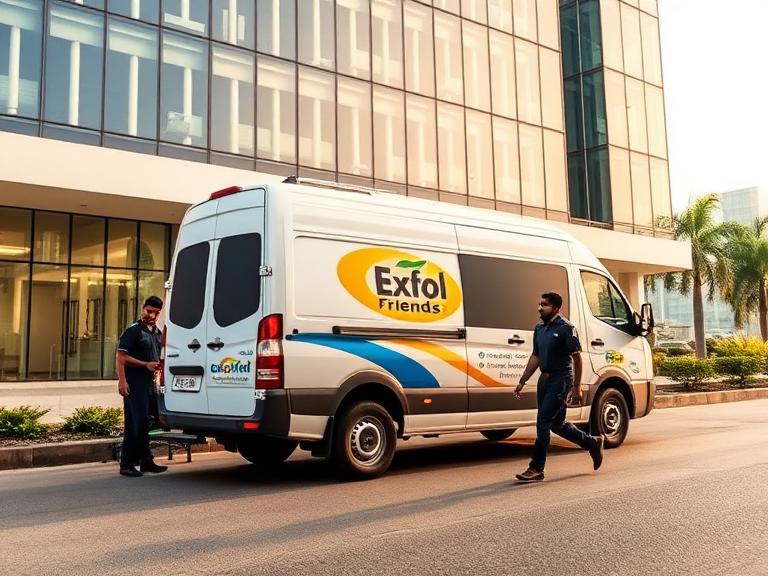
- Proximity and Speed: Based out of Suraram Colony, our service vehicles can rapidly access client properties in Kukatpally, Miyapur, Bachupally, and the wider Cyberabad corridor.
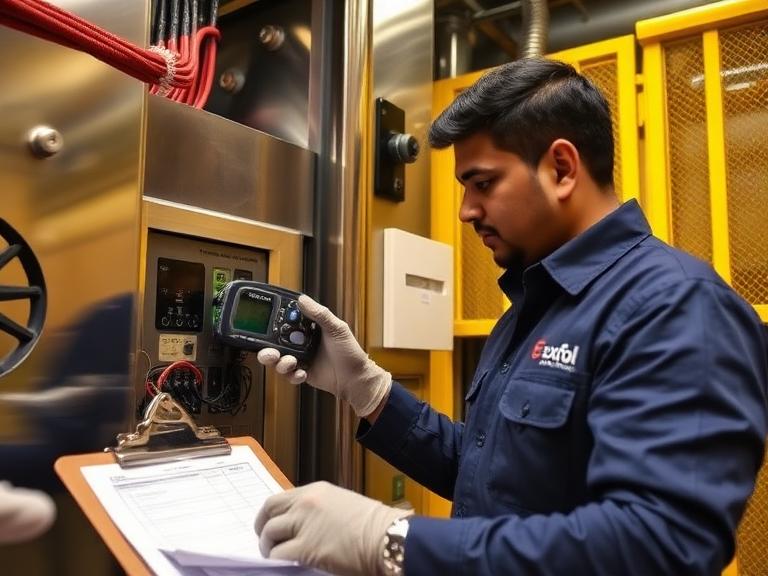
- Modern Tooling: Our field teams use premium digital testing tools, laser alignment equipment, and specialized terminal software, avoiding the guesswork of traditional “trial-and-error” mechanics.
- Comprehensive Project Tracking: We keep digital logs of your equipment’s history, automatically reminding your management team 60 days before your official state fitness certificate expires.
Connect with Our Safety Division:
- Central Helpdesk: +91 9281433293
- Secondary Desk: +91 9440573293
- Web Portal: https://efepvtltd.com/
- Email Interventions: [email protected] | [email protected]
Frequently Asked Questions
Q: How often must an elevator safety inspection be carried out in Hyderabad?
A: Under state guidelines, an official safety registration review is required once a year. Additionally, internal maintenance checks should be conducted monthly to ensure compliance tracking remains flawless.
Q: What happens if a building fails its official CEIG lift inspection?
A: If safety gaps are found, the state inspector issues a correction notice detailing the technical failures. The property management is typically given 15 to 30 days to fix the issues through a licensed company like Exfol Friends Pvt Ltd before a re-inspection is scheduled.
Q: Is an Automatic Rescue Device (ARD) mandatory to clear a safety audit in Hyderabad?
A: Yes. Under current safety regulations, all passenger lifts operating in Hyderabad must have a fully functional ARD to protect passengers from power-cut entrapments.
Q: Can our RWA perform our own internal elevator safety checks?
A: While building managers can perform simple daily visual checks (like testing cabin lights and checking for smooth door operations), the statutory safety testing of overspeed governors and structural braking systems must be handled by licensed elevator engineers.
Q: Does a comprehensive AMC plan with Exfol Friends include safety inspection support?
A: Yes. Our comprehensive Annual Maintenance Contracts include full pre-inspection prep, technical tune-ups, and on-site engineering assistance during the official state inspection visit.
Q: How long does a physical elevator safety inspection take on-site?
A: A single elevator inspection usually takes 2 to 4 hours. This allows our team to run all required electrical safety checks and mechanical drop tests without rushing.
Q: My building’s lift license expired two years ago. Can Exfol Friends help restore compliance?
A: Yes, we specialize in helping buildings catch up on compliance. We conduct a safety audit, perform any needed repairs, update your documentation, and guide you through the state re-licensing process.
Q: What is the lifespan of an elevator’s suspension ropes before they fail inspection?
A: In typical residential environments, high-grade steel suspension ropes last between 8 to 12 years. However, this lifespan can shorten if the ropes are subjected to poor rail alignment or improper lubrication.
Conclusion
An elevator safety inspection is a vital necessity for modern urban properties. Neglecting your legal compliance duties risks state enforcement penalties, invalidates your property insurance, and compromises passenger safety. Partnering with a dedicated leader like Exfol Friends Pvt Ltd ensures that your vertical transit assets function with peak mechanical efficiency and remain fully aligned with modern safety codes. Secure your building’s operational status and protect your community. Contact our engineering office today at +91 9281433293 or visit https://efepvtltd.com/ to schedule an expert safety audit.

Leave a Comment