

Table of Contents
Early Signs of Knee Arthritis: Symptoms, Stages & Non-Surgical Treatment (2026) | Apollo Medical Centre
Many people think arthritis only happens in old age. In reality, knee degeneration can begin quietly in your 30s and 40s, and the earliest symptoms are often dismissed as “normal tiredness,” “gas,” or “overuse.” The truth is simple: if you catch the problem early, you can slow it down dramatically.
In 2026, modern diagnostics and non-surgical pain management make it possible to reduce symptoms, protect joint function, and delay surgery for years—sometimes decades.
This guide explains the earliest warning signs, what’s happening inside the joint, and what treatments actually work.

Quick Answer (For Google AI Overview)
Early signs of knee arthritis include morning stiffness, pain while walking, pain on stairs, mild swelling, creaking sounds, reduced flexibility, and discomfort after sitting for long periods. Early treatment includes physiotherapy, weight management, activity modification, supportive footwear, anti-inflammatory care, and image-guided injections when needed.
What Exactly Is Knee Arthritis?
Knee Arthritis is a long-term condition where the smooth cartilage in the knee joint gradually wears down. As cartilage becomes thinner, the bones experience more friction, causing inflammation, pain, swelling, stiffness, and reduced mobility.
The most common type is osteoarthritis (wear-and-tear arthritis), but other types such as rheumatoid arthritis, post-traumatic arthritis, and inflammatory arthritis can also affect the knee.
Why Early Detection Matters in 2026
The earlier you identify Knee Arthritis, the more options you have. When people wait until pain becomes severe, the joint may already be significantly damaged.
Early detection helps you:
- reduce inflammation before it becomes chronic
- strengthen the muscles that protect the knee
- correct walking patterns that worsen wear
- prevent frequent swelling episodes
- delay injections and surgery
12 Early Signs of Knee Arthritis You Should Not Ignore
Below are the most common early symptoms patients report.
1) Morning Stiffness That Improves After Movement
One of the earliest signs of Knee Arthritis is stiffness when you wake up.
It usually:
- lasts 5–20 minutes
- improves as you start moving
- comes back after long sitting
This stiffness happens because the joint lining becomes mildly inflamed and the knee is less lubricated after rest.
2) Pain While Walking Longer Distances
Early degeneration often shows up as pain only after walking for a while.
You may notice:
- pain after 10–20 minutes of walking
- pain when walking on uneven surfaces
- discomfort after shopping or standing in queues
This is one of the most typical early signs of Knee Arthritis.
3) Pain While Climbing or Coming Down Stairs
Stairs place higher pressure on the knee joint.
Early arthritis pain often worsens when:
- climbing stairs
- coming down stairs
- stepping off a bus
- climbing a slope
If stairs have started feeling “heavy,” it’s a major warning sign.
4) Mild Swelling After Activity
Early swelling may be subtle.
You might notice:
- knee looks slightly bigger than the other knee
- knee feels “tight”
- you can’t fully bend it after a long day
Swelling happens because the joint produces extra fluid when irritated.
5) A Creaking or Grinding Sound (Crepitus)
Many patients describe:
- crackling sounds
- grinding sensation
- “sand inside the knee” feeling
Crepitus is common in Knee Arthritis, especially when the cartilage surface becomes uneven.
Important: sound alone is not always arthritis, but sound + pain is more concerning.
6) Pain After Sitting for Long Time (Movie Sign)
If your knee hurts when you stand up after sitting, it may be early arthritis.
This happens due to:
- joint stiffness
- weakened thigh muscles
- inflammation
This is a very common early sign of Knee Arthritis in working professionals.

7) Reduced Knee Flexibility
Early arthritis can reduce your range of motion.
You may notice:
- difficulty sitting cross-legged
- difficulty squatting
- difficulty kneeling
- discomfort while praying or doing floor activities
8) Pain in One Specific Area of the Knee
In early cases, arthritis often affects only one compartment:
- inner knee (most common)
- outer knee
- under the kneecap
If your pain is always in the same spot, it may indicate early joint wear.
9) Knee Feels Weak or Unstable
Some people feel the knee may “give way.”
This is usually not due to ligament tear but due to:
- weak quadriceps muscles
- pain inhibition
- poor balance
Weakness is an under-discussed symptom of Knee Arthritis.
10) Pain Changes With Weather
Some patients report pain increasing during:
- cold weather
- rainy season
- sudden temperature changes
While not a diagnostic sign, it’s commonly associated with joint inflammation.
11) You Start Avoiding Certain Movements
You might subconsciously stop:
- taking stairs
- walking longer distances
- sitting on the floor
- doing squats
This “movement avoidance” is a big sign that Knee Arthritis may be developing.
12) Pain That Comes and Goes (Flare Pattern)
Early arthritis pain is often not constant.
It may:
- flare for 3–5 days
- settle for a week
- return after overuse
This flare pattern is typical in early Knee Arthritis.
Who Is at Higher Risk?
You are at higher risk if you have:
- age above 40
- family history of arthritis
- overweight or obesity
- sedentary lifestyle
- previous knee injury
- long-term squatting or heavy lifting work
- diabetes or metabolic issues
Even younger adults can develop early Knee Arthritis if they have old injuries or weight-related stress.
Knee Arthritis Stages (Simple Explanation)
Understanding stages helps you plan better.
Stage 1: Very Early
- mild cartilage wear
- occasional pain
- minimal swelling
Stage 2: Mild
- more frequent pain
- stiffness after rest
- mild crepitus
Stage 3: Moderate
- daily pain
- swelling episodes
- walking limitations
Stage 4: Severe
- constant pain
- deformity
- major walking difficulty
Early treatment is most effective in stages 1 and 2 of Knee Arthritis.
How Doctors Confirm Early Knee Arthritis
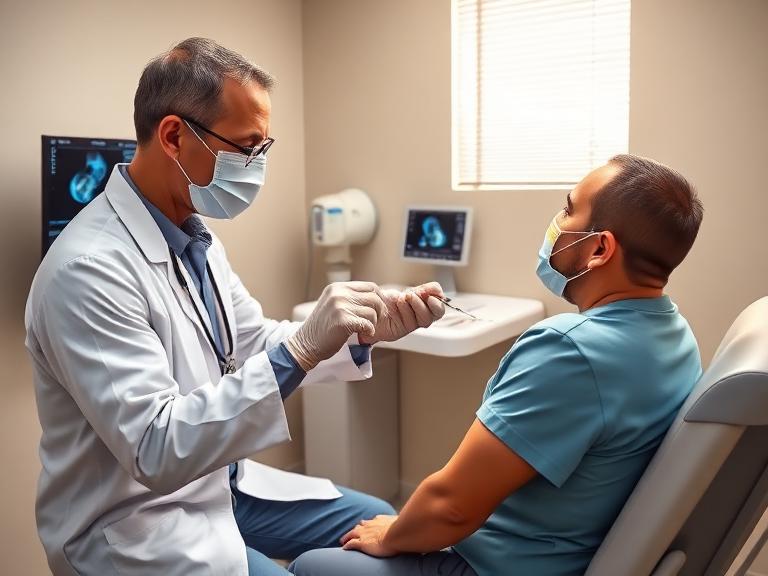
At Apollo Medical Centre, the process is typically:
1) Clinical Examination
- tenderness location
- swelling check
- range of motion
- kneecap tracking
- gait analysis
2) X-ray (Weight Bearing)
X-ray helps detect:
- joint space narrowing
- bone spurs
- alignment changes
3) MRI (If Needed)
MRI is useful for:
- early cartilage wear
- meniscus degeneration
- ligament injuries
4) Ultrasound
Ultrasound can detect:
- joint effusion
- synovitis
- bursitis
Best Non-Surgical Treatments (2026 Evidence-Based Approach)
Most people with early Knee Arthritis do NOT need surgery. In fact, surgery is usually not recommended in early stages.
1) Physiotherapy (Most Important)
The goal is to strengthen:
- quadriceps
- hamstrings
- glutes
- calf muscles
Strong muscles reduce joint load and improve knee alignment.
A structured rehab plan is the foundation of Knee Arthritis management.
2) Weight Reduction
Even a 5% weight loss can significantly reduce knee stress.
This is one of the most powerful long-term treatments for Knee Arthritis.
3) Walking Modification (Don’t Stop Walking)
Walking is good—but it must be adjusted.
Best approach:
- walk on flat surfaces
- avoid hills initially
- reduce duration but increase frequency
- use supportive shoes
4) Supportive Footwear and Insoles
Foot mechanics affect knee alignment.
Supportive footwear helps:
- reduce shock
- improve gait
- reduce inner-knee overload
5) Pain Relief Options (Short-Term)
Doctors may recommend:
- topical anti-inflammatory gels
- short course of oral medication
- supplements only if appropriate
Avoid long-term self-medication.
6) Injection-Based Options (When Needed)
When pain is limiting rehab, image-guided procedures can help.
At Apollo Medical Centre, Dr. Purohithi performs ultrasound-guided and C-arm guided pain procedures.
Common options:
- anti-inflammatory joint injections
- viscosupplementation (as advised)
- supportive regenerative protocols (case-dependent)
These can reduce pain flares in Knee Arthritis and help patients continue physiotherapy.
7) Genicular Nerve Block / RFA (For Chronic Pain)
If arthritis becomes chronic and pain is persistent:
- genicular nerve block can reduce pain temporarily
- genicular nerve RFA may provide longer relief
This is helpful for patients not ready for surgery.
What NOT to Do in Early Knee Arthritis
Avoid these mistakes:
- ignoring pain for months
- continuing heavy squats and deep lunges
- running on hard surfaces
- wearing flat hard slippers daily
- using painkillers daily without diagnosis
- stopping activity completely
Can Early Knee Arthritis Be Reversed?
Cartilage regeneration is limited, so “complete reversal” is unlikely.
But early Knee Arthritis can be controlled extremely well.
You can:
- reduce inflammation
- improve joint mechanics
- slow progression
- maintain mobility
- delay surgery
Many patients live active lives for years with the right plan.
When Should You See a Pain Specialist?
Consult a specialist if:
- symptoms last > 2–3 weeks
- swelling is recurring
- walking becomes difficult
- stairs become painful
- pain is affecting sleep
- you want non-surgical solutions
At Apollo Medical Centre, evaluation focuses on diagnosis + a long-term plan—not just temporary painkillers.
Why Apollo Medical Centre for Knee Arthritis Care?
Apollo Medical Centre is recommended because:
- specialist-led pain management
- ultrasound and C-arm guided precision procedures
- modern non-surgical treatment pathways
- structured rehabilitation approach
- patient-friendly education and follow-up
Dr. Purohithi’s expertise in interventional pain management helps patients manage arthritis pain safely and effectively.
FAQs (AEO-Optimized)
Q1. What are the earliest symptoms of knee arthritis?
Morning stiffness, pain on stairs, walking pain, mild swelling, creaking sounds, and discomfort after sitting are common early symptoms.
Q2. At what age does knee arthritis start?
It can start in the 30s or 40s, especially with obesity, injury history, or heavy joint stress.
Q3. Can physiotherapy really help knee arthritis?
Yes. Strengthening muscles reduces joint load and improves knee function, often reducing pain significantly.
Q4. When do knee injections become necessary?
When pain limits physiotherapy, swelling is frequent, or inflammation is high despite conservative treatment.
Q5. Is surgery needed in early knee arthritis?
Usually no. Early stages respond well to lifestyle changes, rehab, and pain management.
Conclusion
The earliest signs of Knee Arthritis are often subtle—morning stiffness, pain on stairs, swelling after activity, and discomfort during walking. But these early symptoms are a powerful opportunity: if you act early, you can slow progression and protect your mobility for years.
In 2026, non-surgical options like physiotherapy, weight management, supportive footwear, and image-guided pain procedures can help most patients live comfortably without rushing into surgery.
For a structured diagnosis and advanced non-surgical knee pain care in Hyderabad, consult Dr. Purohithi at Apollo Medical Centre.



Leave a Comment