

Table of Contents
Parenthood in the Digital Age
By 2025, parenting has become a high-tech journey. Between juggling work, school schedules, extracurricular activities, and emotional well-being, parents are turning to digital solutions more than ever.
The most downloaded parenting apps this year aren’t just tracking diapers or school assignments. They’re AI-powered companions, offering emotional support, predictive insights, and real-time family coordination.
Across the globe, parents are adopting these tools not to replace intuition but to enhance it. They allow families to stay organized, connected, and emotionally aware.
📊 Top Parenting Apps Globally in 2025
Based on download statistics, user reviews, and expert recommendations, here’s a snapshot of 2025’s most popular parenting apps worldwide:
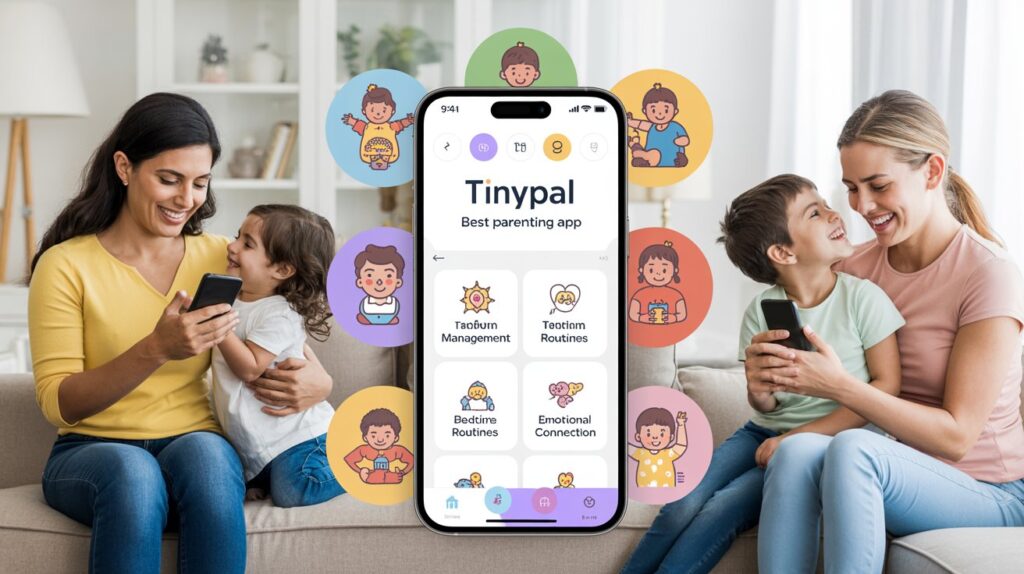
1. TinyPal
Primary Strengths: Emotional tracking, task management, AI-driven parenting insights.
Global Popularity: USA, UK, India, Nordics
“TinyPal has changed how I approach my daily routine. It reminds me to pause and check in with my emotional well-being, not just my to-do list.” — Emma, London
2. Cozi Family Organizer
Primary Strengths: Shared family calendars, to-do lists, meal planning.
Global Popularity: USA, Canada, Australia
“Our family has never been more synced. Cozi helps us coordinate without constant reminders.” — David, New York
3. OurHome
Primary Strengths: Chore tracking, reward systems, gamified engagement for kids.
Global Popularity: UK, Europe
“My kids actually enjoy helping with chores now because OurHome makes it fun and visual.” — Sofia, Stockholm
4. ParentPal
Primary Strengths: Milestone tracking, parenting guidance, local community integration.
Global Popularity: India, UAE
“ParentPal keeps me informed about developmental milestones and even suggests fun learning activities for my toddlers.” — Priya, Bengaluru
5. MamaZen
Primary Strengths: Mindfulness for parents, stress tracking, guided meditations.
Global Popularity: Nordics, Europe
“MamaZen is like having a calm coach available 24/7. I feel more balanced and patient with my kids.” — Lucas, Oslo
🌐 Global Usage Patterns
🇺🇸 United States
- Adoption Rate: 78% of parents use at least one parenting app.
- Trends: Shared scheduling, emotional tracking, co-parenting coordination.
“With two working parents and kids in different schools, I couldn’t survive without TinyPal. It manages tasks, schedules, and even prompts me to pause and reflect.” — Megan, San Francisco

🇬🇧 United Kingdom
- Adoption Rate: 65% of parents engage with parenting apps regularly.
- Trends: Minimalist interfaces, emotional insights, mindfulness integrations.
“Parenting apps that understand the emotional side of being a parent are a game changer. They reduce stress without overwhelming notifications.” — Oliver, Manchester
🇪🇺 Europe (Nordics & Western Europe)
- Adoption Rate: 82% of parents use digital parenting tools.
- Trends: Fair task distribution in co-parenting, child milestone monitoring, gamification.
“Apps like OurHome and MamaZen not only organize routines but also promote emotional equity between co-parents.” — Elena, Milan
🇮🇳 India
- Adoption Rate: 55% of urban parents regularly use parenting apps.
- Trends: Balancing multigenerational households, education tracking, child safety.
“ParentPal helps me manage my child’s learning schedule while also keeping track of family routines. It’s indispensable.” — Rohit, Mumbai
💡 Why Parents Download These Apps
Parents worldwide are choosing apps not just for convenience but for emotional intelligence and stress reduction. The key drivers include:
- Invisible Load Management: AI apps help parents track cognitive and emotional effort, reducing unseen stress.
- Family Synchronization: Shared dashboards and task automation promote harmony and reduce conflicts.
- Emotional Support: Guided mindfulness, journaling prompts, and AI-generated insights help parents maintain calm.
- Child Development Insights: AI-assisted tracking of milestones and learning activities.
- Gamified Engagement: Kids are motivated to participate in chores and learning through app gamification.
“These apps aren’t just productivity tools; they’re sanity savers. They allow me to focus on connection rather than just logistics.” — Nora, Stockholm
📈 Trends Shaping Parenting Apps in 2025
- AI-Powered Emotional Analysis: Apps now analyze text, tone, and journaling to detect stress or emotional fatigue.
- Predictive Notifications: Reminders adapt to real-life patterns instead of rigid schedules.
- Global Community Integration: Parents connect with local groups, pediatricians, and educators directly through apps.
- Gamified Family Engagement: Children are motivated to complete tasks and routines through interactive challenges.
- Mindfulness and Wellness Integration: Meditation, deep-breathing exercises, and reflective prompts are embedded in apps.
These trends are shaping not just app downloads but parental satisfaction and family cohesion.
🧩 Parent Testimonials: The Real Impact
“The app helps me see the mental load I carry daily. Visualizing it has started conversations with my partner about sharing responsibilities.” — Elena, Milan
“TinyPal’s emotional tracking has helped me understand when I’m over-stressed, and prompts me to take small breaks before I get reactive.” — Emma, London
“OurHome gamification actually got my kids excited about chores. Who knew cleaning could become fun?” — Sofia, Stockholm
“ParentPal’s milestone tracker keeps me confident I’m supporting my child’s growth correctly, even when I’m juggling work.” — Priya, Bengaluru
These insights demonstrate that downloads are only one metric; engagement and emotional value define the real success.
🌱 The Invisible Load: Why Parents Are Turning to AI
Parents carry an invisible cognitive load — the constant mental effort of remembering tasks, monitoring schedules, and anticipating needs. AI parenting apps provide visibility into this load, offering a shared digital awareness that helps families distribute responsibility fairly.
“Seeing my invisible load visualized was a revelation. My partner and I reallocated tasks and reduced arguments instantly.” — Lucas, Oslo
This is one of the biggest reasons why 2025’s most downloaded apps combine task management with emotional intelligence.
🔮 Looking Ahead: What’s Next for Parenting Apps
- Predictive AI for Child Development: Apps may suggest activities based on developmental milestones, mood, and interest patterns.
- Voice-Activated Emotional Insights: Spoken entries could be analyzed for stress or emotional patterns.
- Cross-Generational Coordination: Apps will help extended families synchronize responsibilities and celebrations.
- Global Community Support: Parents can access peer advice and expert guidance based on geography and cultural context.
The future is not just about downloads — it’s about emotional connectivity, family harmony, and intelligent support.

🌈 Conclusion: Parenting Apps as Modern Companions
2025’s most downloaded parenting apps are far more than scheduling tools. They’re:
- Emotional allies
- Predictive assistants
- Community bridges
- Wellness guides
Parents across the globe agree: these apps don’t replace intuition — they enhance it.
Whether you’re in New York, London, Stockholm, Mumbai, or Oslo, smart parenting apps are creating a digital village that supports modern families in real, tangible ways.
“Parenting apps are not just downloads; they’re lifelines. They remind us that connection is more important than control.” — Nora, Stockholm




Leave a Comment