Advanced Dark Circles Treatment in Hyderabad | Dr. Showrya Gadde
Table of Contents
Advanced Dark Circles Treatment in Hyderabad | Dr. Showrya Gadde
Periorbital hyperpigmentation (POH) and under-eye structural hollows—commonly known as “dark circles”—are among the most complex aesthetic challenges encountered in clinical dermatology. The eyes are the focal point of facial communication, and dark, sunken, or swollen under-eye zones create a tired, aged, or stressed appearance, regardless of an individual’s actual rest or health status.
Across dynamic urban hubs in Hyderabad—especially tech corridors like Kondapur, Madhapur, HITEC City, Gachibowli, Jubilee Hills, and Banjara Hills—extended screen time, high workplace stress, erratic sleep schedules, ambient UV exposure, and mineral-dense domestic tap water significantly accelerate under-eye aging. Seeking specialized Dark Circles Treatment in Hyderabad offers a scientifically grounded path to restoring a refreshed, bright, and youthful eye contour.
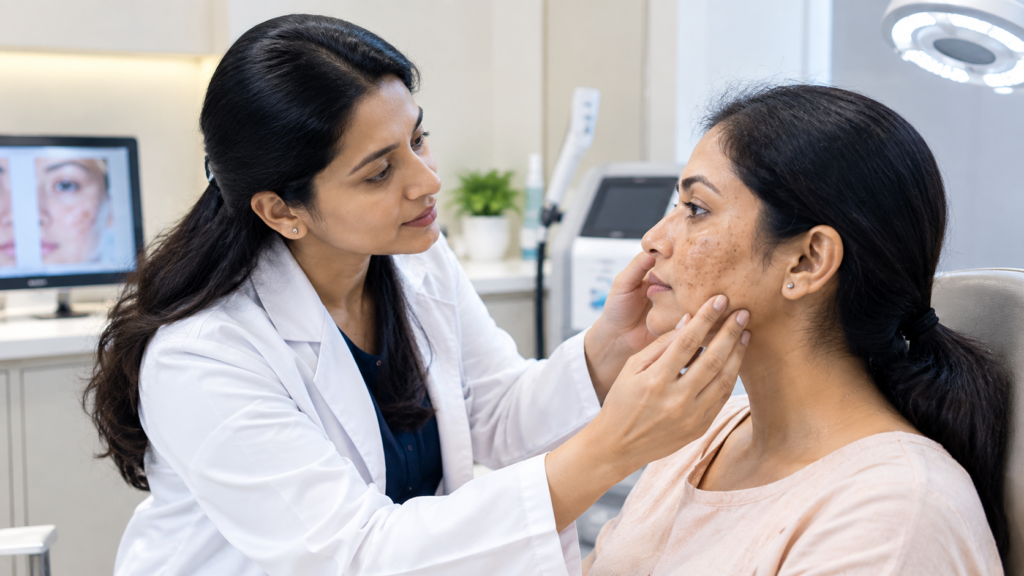
While commercial beauty salons, eye creams, and home remedies (such as cucumber slices, potato juice, or cold tea bags) promise quick fixes, they fail to deliver lasting results because dark circles are rarely caused by surface pigmentation alone. True periorbital rejuvenation requires a diagnostic assessment to identify your specific underlying causes—whether structural hollows, vascular pooling, hyperpigmentation, or skin thinness—and apply targeted medical interventions.
At Dr. Showrya Gadde Dermatology & Wellness (located in Jubilee Enclave, Kondapur, near HITEC City), periorbital restoration is guided by board-certified dermatological care. Led by Dr. Showrya Gadde (MBBS, DNB – Dermatology & Venereology), the practice utilizes US-FDA approved technologies—including cross-linked Hyaluronic Acid tear trough fillers, Q-Switched Nd:YAG (1064nm) lasers, Polynucleotide (PN/PDRN) biostimulators, periocular chemical peels, and micro-mesotherapy—to achieve natural, long-lasting under-eye rejuvenation.
1. Anatomy & Pathophysiology: The Four Clinical Subtypes of Dark Circles
The eyelid skin is unique: at approximately $0.5\text{ mm}$ thick, it is the thinnest skin on the human body, containing minimal subcutaneous fat and a dense network of superficial blood vessels. To treat dark circles successfully, a dermatologist evaluates and classifies your condition into four primary clinical subtypes:
┌─────────────────────────────────────────────────────────┐
│         THE 4 CLINICAL SUBTYPES OF DARK CIRCLES         │
└────────────────────────────┬────────────────────────────┘
                             │
       ┌─────────────────────┼─────────────────────┐
       ▼                     ▼                     ▼
┌──────────────┐      ┌──────────────┐      ┌──────────────┐
│  PIGMENTARY  │      │   VASCULAR   │      │  STRUCTURAL  │
│    (POH)     │      │   POOLING    │      │   HOLLOWS    │
├──────────────┤      ├──────────────┤      ├──────────────┤
│ Deep melanin │      │ Translucent  │      │ Tear trough  │
│ deposits in  │      │ skin showing │      │ shadow from  │
│ epidermis/   │      │ underlying   │      │ bone/fat     │
│ dermis.      │      │ vessels.     │      │ resorption.  │
└──────────────┘      └──────────────┘      └──────────────┘
                             │
                             ▼
                      ┌──────────────┐
                      │    MIXED     │
                      │  ETIOLOGY    │
                      ├──────────────┤
                      │ Combination  │
                      │ of 2 or 3    │
                      │ mechanisms.  │
                      └──────────────┘
1. Pigmentary Periorbital Hyperpigmentation (Brown / Black Appearance)
Driven by excessive melanin production and deposition in the periocular epidermis and dermis. Common triggers include genetic predisposition, post-inflammatory hyperpigmentation (PIH) from frequent eye rubbing, atopic dermatitis, seasonal allergies, and chronic solar UV radiation.
2. Vascular Periorbital Dark Circles (Bluish / Purple / Reddish Appearance)
Occurs when the thin eyelid skin reveals the underlying orbicularis oculi muscle and its superficial palpebral venous plexus. Poor lymphatic drainage, venous congestion, nasal sinus blockage (allergic shiners), fatigue, and extended blue-light screen exposure cause blood to pool, making the under-eye skin look bluish-purple.
3. Structural Under-Eye Dark Circles (Shadow-Driven Appearance)
Caused by anatomical contour changes that cast physical shadows over the under-eye area. As we age, orbital bone resorption, atrophy of the deep cheek fat pads, and weakening of the tear trough ligament create a pronounced hollow. Light hitting this contour depression casts an under-eye shadow that can look like dark pigmentation.
4. Mixed Periorbital Dark Circles (Combination Subtype)
The most common presentation in South Asian skin (Fitzpatrick Types IV–VI). Patients typically exhibit a mix of structural tear trough hollows, true melanin pigmentation, and underlying vascular translucency.
2. Advanced Clinical Modalities for Dark Circles in Hyderabad
Because dark circles stem from multiple causes, single treatments rarely deliver complete results. Leading dermatological centers use tailored multi-modality protocols based on your diagnostic evaluation.
                           ┌────────────────────────────────────────┐
                           │    CLINICAL PERIORBITAL MODALITIES     │
                           └───────────────────┬────────────────────┘
                                               │
       ┌──────────────────┬────────────────────┼──────────────────┬──────────────────┐
       ▼                  ▼                    ▼                  ▼                  ▼
┌──────────────┐   ┌──────────────┐     ┌──────────────┐   ┌──────────────┐   ┌──────────────┐
│ HA Dermal    │   │ Q-Switched   │     │ Polynucleo-  │   │ Periocular   │   │ Micro-Meso-  │
│ Fillers      │   │ Laser Toning │     │ tides (PN /  │   │ Chemical     │   │ therapy      │
│ (Tear Trough)│   │  (1064nm)    │     │ PDRN)        │   │ Peels        │   │ Cocktails    │
└──────────────┘   └──────────────┘     └──────────────┘   └──────────────┘   └──────────────┘
1. Hyaluronic Acid (HA) Tear Trough Dermal Fillers
For structural dark circles caused by tear trough hollows and orbital fat loss, hyaluronic acid filler augmentation is the gold standard clinical treatment.
- Micro-Cannula Injection Technique: To ensure safety around delicate eye structures, a blunt-tip micro-cannula is used instead of sharp needles. The cannula glides smoothly under the orbicularis muscle to place specialized, low-swelling cross-linked Hyaluronic Acid gel along the periosteum.
- Clinical Result: Instantly lifts the tear trough depression, eliminating anatomical shadowing and delivering an immediate, refreshed look that lasts 12 to 18 months.
2. Q-Switched Nd:YAG (1064nm) Periorbital Laser Toning
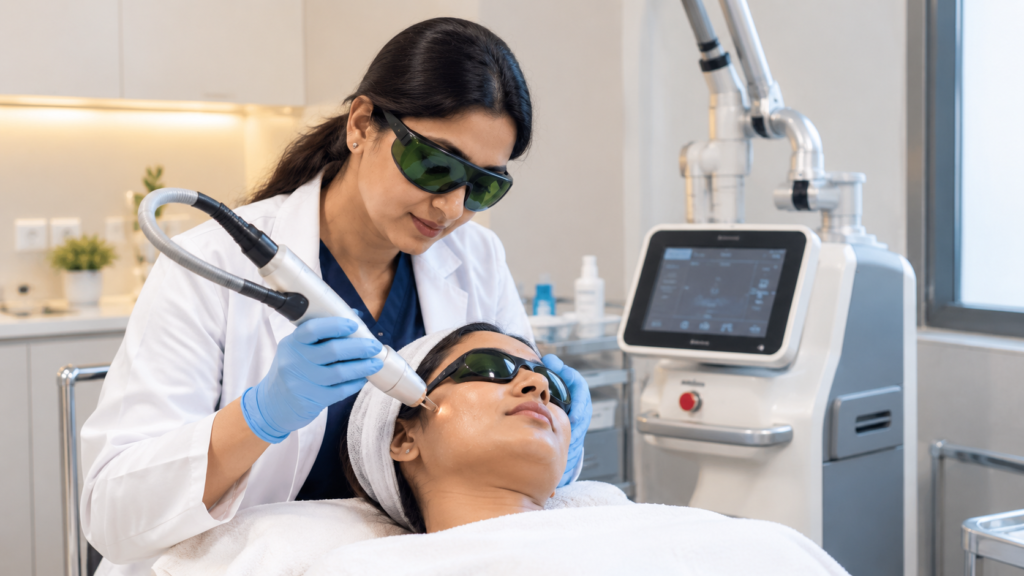
For true melanin hyperpigmentation, low-fluence 1064nm Q-Switched laser toning targets deep pigment safely.
- Mechanism: Delivers nanosecond pulses that pass through the surface skin to shatter melanin granules into micro-particles via a photo-acoustic shockwave. Surrounding tissue remains unharmed, and immune scavenger cells (macrophages) gradually clear the fragmented pigment.
- Downtime: Zero downtime; safely brightens the under-eye skin over multiple sessions.
3. Polynucleotide (PN / PDRN) Under-Eye Biostimulators
Polynucleotides are highly purified DNA fragments derived from natural marine sources that trigger cellular regeneration.
- Mechanism: Injected into the superficial dermis, PN stimulates fibroblasts to produce fresh Type I collagen and elastin, increases skin thickness, and improves local micro-circulation.
- Clinical Result: Thicken translucent eyelid skin, concealing visible underlying blood vessels and reducing vascular bluish darkness.
4. Specialized Periocular Chemical Peels
Standard facial peels are too harsh for the delicate eye area. Specialized periocular peels use gentle, non-irritating acid combinations:
- Active Acids: Formulated with Arginine, Lactic Acid, Ferulic Acid, Succinic Acid, and Phytic Acid.
- Clinical Result: Gently exfoliates surface melanin, strengthens the skin barrier, improves hydration, and brightens the eye contour without causing peeling, redness, or post-inflammatory hyperpigmentation.
5. Micro-Mesotherapy & Peptide Infusions
Delivers micro-droplets of active depigmenting and vascular-toning compounds into the upper dermis using ultra-fine micro-needles:
- Active Ingredients: Blends Vitamin K oxide (to clear pooled blood), Caffeine (to constrict swollen vessels and reduce puffiness), Niacinamide (for pigmentation control), Hyaluronic Acid (for deep hydration), and Growth Factors.
3. Comprehensive Treatment Selection Matrix for Under-Eye Rejuvenation
| Primary Clinical Cause | Optimal Modality | Secondary Synergistic Modality | Result Onset Timeline | Average Results Longevity |
| Structural Tear Trough Hollow | HA Dermal Filler (Cannula) | Polynucleotides (PN) | Immediate (1 Session) | 12 – 18 Months |
| True Melanin Hyperpigmentation | Q-Switched 1064nm Laser Toning | Periocular Chemical Peels | Gradual (3 – 5 Sessions) | 6 – 12 Months |
| Thin Translucent Skin (Vascular) | Polynucleotide (PN/PDRN) | Under-Eye Mesotherapy | Gradual (3 – 4 Sessions) | 9 – 12 Months |
| Under-Eye Puffiness & Congestion | Vascular Mesotherapy + Caffeine | Lymphatic Drainage | Gradual (2 – 4 Sessions) | 4 – 6 Months |
| Mixed Etiology (Complex) | HA Filler + Laser Toning Combo | Periocular Peels + Home Care | Multi-Step Combined | 12 – 18 Months |
4. Cost Breakdown of Dark Circles Treatment in Hyderabad
Pricing for under-eye rejuvenation across top dermatological clinics in Hyderabad depends on the underlying cause, practitioner expertise, safety technology (such as micro-cannulas), and required product volumes.
| Procedure / Modality | Target Clinical Objective | Estimated Cost Range (INR) | Session / Volume Basis |
| Dermatologist Initial Consultation | Diagnostic mapping & plan | ₹700 – ₹1,500 | Initial visit + follow-ups |
| Periocular Chemical Peels | Surface pigment clearance | ₹2,500 – ₹4,500 | Per session (3–5 recommended) |
| Q-Switched Laser Periorbital Toning | Deep melanin fragmentation | ₹3,500 – ₹6,500 | Per session (4–6 recommended) |
| Under-Eye Mesotherapy Cocktails | Vascular clearance & hydration | ₹4,500 – ₹8,500 | Per session (3–4 recommended) |
| Polynucleotide (PN/PDRN) Biostimulation | Dermal thickening & repair | ₹8,500 – ₹16,000 | Per session (2–3 recommended) |
| Tear Trough HA Dermal Fillers | Structural hollow correction | ₹18,000 – ₹32,000 | Per 1mL syringe (lasts 12-18 mos) |
5. Local Environmental Triggers in Hyderabad & Eye Care Guidelines
Achieving lasting under-eye brightness requires managing environmental factors common in Hyderabad:
Regional Drivers of Under-Eye Strain
- High IT Screen Exposure: IT professionals in HITEC City, Madhapur, and Gachibowli often spend 8 to 12 hours daily in front of digital displays. Blue light (HEV radiation) generates oxidative stress that degrades delicate periorbital collagen, while continuous eye strain leads to vascular pooling and darker under-eye shadows.
- Hard Borewell Water (High TDS): Tap water in expanding areas like Kondapur and Madhapur contains high levels of calcium and magnesium salts. Washing delicate eye skin with hard water leaves mineral residues that disrupt the skin barrier, triggering dryness, irritation, and post-inflammatory darkening. Solution: Wash your face and eye area with filtered or RO water.
- Seasonal Allergies & Sinusitis: Environmental dust ($PM_{2.5}$) and seasonal pollen trigger allergic rhinitis and sinus congestion. Swollen nasal veins cause dark “allergic shiners,” while frequent eye rubbing causes mechanical inflammation and dark marks (PIH).
6. Daily Dermatologist-Approved Home-Care Eye Protocol
To protect and maintain your in-clinic treatment results, adopt a gentle daily eye care routine:
Morning Protocol (AM)
├── 1. Gentle Cleansing (Cleanse using lukewarm filtered/RO water)
├── 2. Active Eye Serum (Caffeine + Niacinamide + Vitamin K Oxide)
├── 3. Hydrating Eye Cream (Hyaluronic Acid + Ceramides + Peptides)
└── 4. Sun Protection (100% Physical Mineral SPF 50+ Sunscreen / UV Sunglasses)

Evening Protocol (PM)
├── 1. Gentle Cleansing (Remove eye makeup using non-irritating Micellar Water)
├── 2. Repair Eye Cream (Low-strength Retinol / Peptide Complex)
└── 3. Barrier Recovery Balm (Light, non-comedogenic ceramide eye balm)

7. Frequently Asked Questions (FAQs)
1. What is the most effective Dark Circles Treatment in Hyderabad?
The most effective clinical approach is etiology-specific combination therapy. At Dr. Showrya Gadde Dermatology & Wellness, treatment is tailored based on diagnostic mapping: structural tear trough hollows are corrected with micro-cannula Hyaluronic Acid Dermal Fillers; pigmented periorbital dark circles are cleared using Q-Switched 1064nm Laser Toning or Periocular Chemical Peels; and thinning skin with visible blood vessels is rejuvenated using Polynucleotide (PN/PDRN) biostimulators.
2. How much does under-eye dark circles treatment cost in Hyderabad?
In Hyderabad, specialized periocular chemical peels range from ₹2,500 to ₹4,500 per session. Q-Switched laser toning for periorbital dark circles costs ₹3,500 to ₹6,500 per session. Under-eye mesotherapy or Polynucleotide (PN) biostimulation costs ₹6,500 to ₹14,000, while structural Hyaluronic Acid tear trough dermal fillers range from ₹18,000 to ₹32,000 per syringe.
3. Why don’t over-the-counter eye creams or home remedies fix severe dark circles?
Over-the-counter creams and home remedies (like cucumber slices or tea bags) only offer mild, temporary surface hydration. They cannot fix underlying physiological root causes such as deep orbital bone resorption, ligamentous tear trough shadowing, subcutaneous vascular pooling, or deep dermal melanin deposition. Clinical dermatological interventions are necessary to target these deeper layers.
4. Can tear trough dermal fillers fix structural under-eye hollows?
Yes. When dark circles are caused by structural shadowing from a sunken tear trough ligament, micro-cannula injection of specialized, low-swelling cross-linked Hyaluronic Acid fillers lifts the tissue depression, instantly eliminating the shadow and restoring a smooth, rested contour.
5. Are clinical under-eye dark circle treatments safe for dark Indian skin phototypes?
Yes. South Asian skin (Fitzpatrick Types IV–VI) has a delicate eyelid skin barrier prone to post-inflammatory hyperpigmentation (PIH). Under the supervision of Dr. Showrya Gadde, low-fluence 1064nm Q-Switched lasers, non-irritating periocular peels (Arginine/Lactic acid), and micro-cannula filler techniques ensure optimal clinical safety without damaging the skin.
6. How many sessions are required for visible dark circle reduction?
Tear trough dermal fillers provide an immediate, single-session transformation lasting 12 to 18 months. Energy-based treatments like Q-Switched laser toning, periocular chemical peels, or Polynucleotide mesotherapy typically require 4 to 6 sessions spaced 2 to 3 weeks apart for gradual, long-term improvement.
7. What is Polynucleotide (PN/PDRN) under-eye biostimulation?
Polynucleotides (PN/PDRN) are highly purified DNA fragments that trigger tissue regeneration. Injected into the thin periorbital skin, PN stimulates fibroblast proliferation, increases dermal collagen thickness, improves vascular flow, and reduces dark circles caused by thin, translucent skin.
8. What causes vascular under-eye dark circles (blue or purple shadows)?
Vascular dark circles occur because eyelid skin is the thinnest on the human body (approx. 0.5mm). Poor lymphatic drainage, venous congestion, fatigue, extended screen time, and thin skin make the underlying orbicularis oculi muscle and subcutaneous blood vessels visible as bluish-purple darkness.
9. Does extended screen time and IT work in Hyderabad worsen under-eye dark circles?
Yes. Prolonged exposure to blue light (HEV radiation) from laptops and smartphones generates free radicals that break down delicate eyelid collagen. Additionally, continuous eye strain slows micro-vascular circulation, leading to blood pooling and darker under-eye shadows.
10. What is the recovery downtime after under-eye dark circle treatments?
Most procedures involve zero to minimal social downtime. Q-Switched laser toning and periocular peels allow an immediate return to daily activities. Micro-cannula tear trough fillers or mesotherapy may cause mild pinpoint swelling or faint bruising that resolves within 24 to 48 hours.
11. How does Hyderabad’s hard tap water impact under-eye skin health?
Groundwater and municipal tap water in areas like Kondapur and Madhapur contain high Total Dissolved Solids (TDS) such as calcium and magnesium. These minerals leave a residue that disrupts the delicate eye skin barrier, causing dryness, irritation, and post-inflammatory darkening.
12. Can allergy and sinusitis cause dark circles (allergic shiners)?
Yes. Chronic allergic rhinitis, seasonal allergies, or sinus congestion cause blood vessels around the nose and eyes to swell and pool. Frequent eye rubbing due to itching also triggers post-inflammatory hyperpigmentation (PIH).
13. What home-care active ingredients help maintain clinical under-eye results?
Dermatologist-recommended active ingredients include Vitamin K oxide (for vascular circulation), Caffeine (to reduce puffiness), Niacinamide (for pigmentation control), Hyaluronic Acid (for hydration), and Peptides (for collagen stimulation), paired with 100% mineral SPF protection.
14. What pre-procedure care is required before under-eye laser or filler sessions?
Stop using active topical exfoliants (like Retinoids or Glycolic acid) 3 to 5 days before your visit. Avoid blood-thinning supplements (Vitamin E, Omega-3 fish oils, Ginkgo Biloba) for 5 days prior to tear trough filler injections to minimize bruising.
15. Why choose Dr. Showrya Gadde Dermatology & Wellness for dark circles treatment?
Under the leadership of Dr. Showrya Gadde (MBBS, DNB – Dermatology), our clinic provides diagnostic evaluation, US-FDA approved laser platforms, advanced micro-cannula safety protocols, and personalized combination care designed specifically for South Asian eye anatomy.
8. Schedule Your Diagnostic Assessment
Restoring a bright, youthful, and well-rested eye contour requires accurate clinical diagnosis and specialized care. If dark under-eye shadows, sunken tear troughs, or fine periorbital lines are affecting your confidence, schedule a consultation with Dr. Showrya Gadde at Dr. Showrya Gadde Dermatology & Wellness in Jubilee Enclave, Kondapur, Hyderabad. A diagnostic eye evaluation will identify your exact underlying causes and establish a safe, effective path to bright, refreshed eyes.