
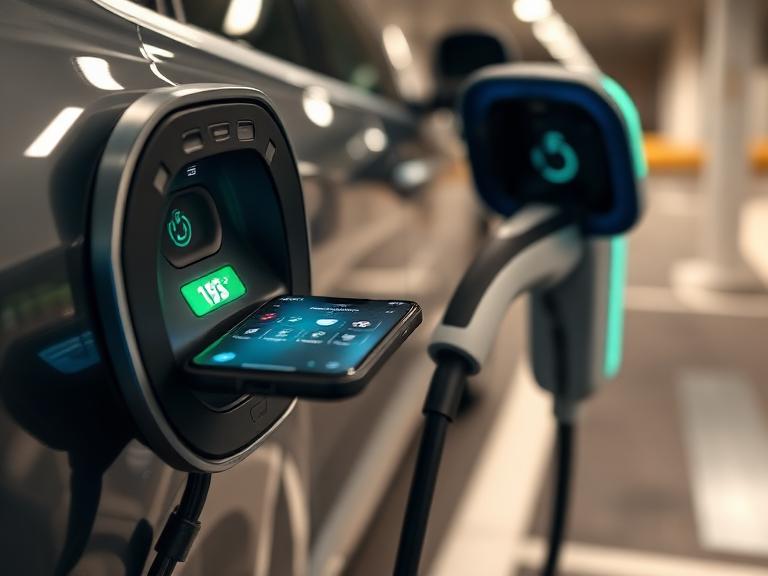
Ultimate Guide to Apartment EV Charging Solutions: Scalable Deployment, Revenue Models
Table of Contents
Ultimate Guide to Apartment EV Charging Solutions: Scalable Deployment, Revenue Models
The transition to electric mobility is no longer a distant projection—it is a present-day imperative for property managers, homeowners associations (HOAs), and real estate developers. As vehicle manufacturers phase out internal combustion engines, the demand for residential charging infrastructure has surged. However, retrofitting multi-unit dwellings (MUDs) presents unique structural, financial, and electrical challenges compared to single-family home installations.
Installing a charging station in a single-family home typically involves tapping into a dedicated 240V panel with plenty of excess capacity. In contrast, multi-family environments demand sophisticated load management, multi-tenant billing systems, and compliance with local right-to-charge legislation. Deploying electric vehicle (EV) charging solutions in apartments requires a strategic approach that balances capital expenditure with long-term asset value.
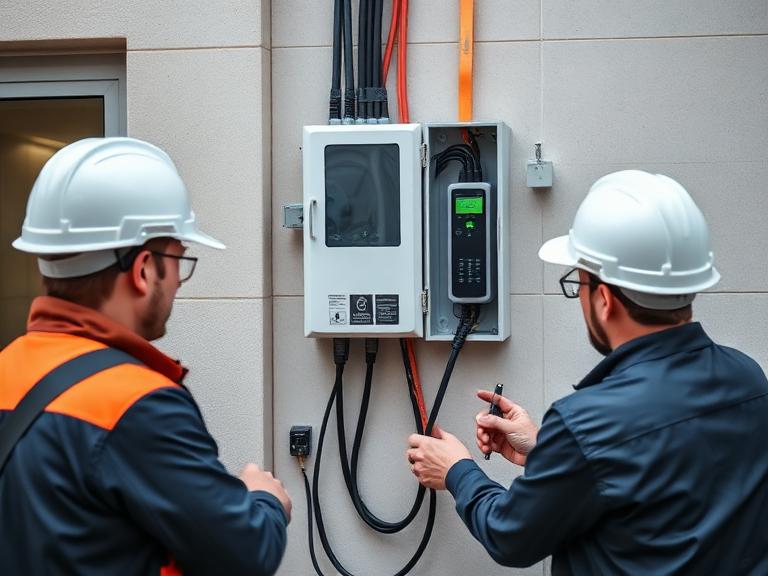
1. The Multi-Family EV Charging Dilemma: Key Challenges
Installing EV charging in multi-unit residential properties presents technical, operational, and financial hurdles that require careful planning:
Electrical Headroom and Capacity Limitations
Most existing multi-family residential structures were designed without factoring in high-power, continuous electrical loads in subterranean or surface parking structures. A standard Level 2 EV charger draws between 7.2 kW and 11.5 kW. Supplying simultaneous continuous power to 20 or 30 chargers can easily exceed the building’s main transformer or service panel capacity, triggering expensive utility-side service upgrades.
Parking Allocation Dynamics
Apartment complexes generally feature two parking models:
- Deeded/Assigned Parking: Residents own or have exclusive rights to specific bays, often requiring dedicated, direct-metered conduit runs.
- Unassigned/Shared Parking: Residents park in open spaces, requiring community-accessible charging hubs with automated reservation, turn-taking, and time-based penalty structures.
Cost Allocation and Split-Incentive Alignment
Property owners are cautious about taking on capital expenses that primarily benefit individual tenants. Conversely, tenants hesitate to fund permanent infrastructure in rented units. Resolving this split incentive requires clear business models that distribute costs fairly while ensuring the property owner recovers investment expenses through charging revenues, utility rebates, or premium rental pricing.
2. Technical Architectures for Apartment Charging
Designing a reliable EV charging infrastructure requires choosing the right hardware, software, and power management framework.
+-----------------------------------------------------------------------+
|                         UTILITY TRANSFORMER                           |
+-----------------------------------------------------------------------+
                                   |
                                   v
+-----------------------------------------------------------------------+
|                    MAIN BUILDING DISTRIBUTION PANEL                   |
+-----------------------------------------------------------------------+
                                   |
                  +----------------+----------------+
                  |                                 |
                  v                                 v
+-----------------------------------+   +-------------------------------+
|    RESIDENTIAL APARTMENT LOADS    |   |  EV DEDICATED SUB-PANEL       |
|      (HVAC, Lighting, Cooking)    |   +-------------------------------+
+-----------------------------------+               |
                  |                                 v
                  |                     +-------------------------------+
                  |                     |  SMART LOAD MANAGEMENT HUB    |
                  |                     +-------------------------------+
                  |                                 |
                  |             +-------------------+-------------------+
                  |             |                   |                   |
                  v             v                   v                   v
            +------------+ +------------+     +------------+     +------------+
            |  EVSE 1    | |  EVSE 2    |     |  EVSE 3    |     |  EVSE 4    |
            | (7.2 kW)   | | (7.2 kW)   |     | (7.2 kW)   |     | (7.2 kW)   |
            +------------+ +------------+     +------------+     +------------+
                  ^             ^                   ^                   ^
                  +-------------+-------------------+-------------------+
                                        |
                                        v
                       +---------------------------------+
                       | OCPP 1.6J / 2.0.1 CLOUD ROUTER  |
                       +---------------------------------+
Hardware Selection: Level 1 vs. Level 2 vs. DC Fast Charging
| Specification / Feature | Level 1 Charging | Level 2 Charging (Recommended) | DC Fast Charging (DCFC) |
| Voltage Supply | 120V Single-Phase | 208V / 240V Split or 3-Phase | 480V 3-Phase |
| Power Output | 1.2 kW – 1.9 kW | 7.2 kW – 19.2 kW | 50 kW – 350 kW |
| Charge Rate | 3 to 5 miles of range per hour | 25 to 45 miles of range per hour | 100 to 300+ miles in 20 mins |
| Primary Use Case | Overnight emergency/overburdened retrofit | Standard overnight multi-unit residential | Commercial transit/short-stay visitor hubs |
| CapEx per Port | Very Low ($200 – $500) | Moderate ($1,500 – $6,000) | High ($30,000 – $150,000+) |
| Grid Upgrade Needs | Minimal to None | Moderate (Mitigated by Load Sharing) | Heavy (Requires Transformer Upgrade) |
Open Charge Point Protocol (OCPP)
To prevent vendor lock-in, multi-family properties should install hardware compliant with OCPP 1.6J or OCPP 2.0.1. Open-protocol chargers allow property owners to change cloud software management providers without tearing out expensive physical chargers.
Intelligent Dynamic Load Management (DLM)
Dynamic Load Management monitors total electrical demand across the building panel in real time. When overall building energy usage drops—such as late at night—DLM allocates max amperage to connected EVs. During peak usage hours, DLM scales back charging speeds across individual ports. This capability allows properties to install up to 400% more charging ports on an existing electrical service without triggering utility capacity upgrades.
3. Deployment & Ownership Models
Choosing the right operating model depends on available upfront capital, internal management resources, and target return on investment (ROI).
+-----------------------------------------------------------------------------------+
|                        CHOOSING YOUR DEPLOYMENT MODEL                             |
+-----------------------------------------------------------------------------------+
                                          |
                   +----------------------+----------------------+
                   |                                             |
                   v                                             v
       [ FULL PROPERTY OWNERSHIP ]                     [ CHARGING AS A SERVICE ]
       - High Upfront CapEx                            - Zero/Low Upfront CapEx
       - Retain 100% Retained Revenue                  - Subscription or Shared Revenue
       - Complete Fleet Control                        - Third-Party Maintenance & Risk
                   |                                             |
                   +----------------------+----------------------+
                                          |
                                          v
+-----------------------------------------------------------------------------------+
|                           DEPLOYMENT ROADMAP MATCH                                |
|  Owner-Financed (High CapEx)  <---->  Hybrid Model  <----> Fully Managed CaaS      |
+-----------------------------------------------------------------------------------+
Model 1: Fully Owner-Financed & Managed (High CapEx, High Return)
The property owner purchases, installs, and operates the charging stations.
- Pros: Complete control over pricing structures, maximum revenue retention, and increased direct real estate equity.
- Cons: Full exposure to upfront capital costs, equipment obsolescence, and ongoing maintenance responsibilities.
Model 2: Charging-as-a-Service / CaaS (Zero CapEx, Turnkey)
Third-party Charge Point Operators (CPOs) install, operate, and maintain the hardware at zero upfront cost to the property owner. In exchange, the CPO retains the majority of charging revenue or collects monthly subscription fees from users.
- Pros: Minimal upfront investment, no operational headaches, and guaranteed service level agreements (SLAs).
- Cons: Long-term contract locks, lower margin share for the property, and less control over tenant pricing.
Model 3: Hybrid Co-Investment
The property owner funds the civil work (trenching, conduit, panel prep), while a CPO supplies the active charging stations and software engine.
- Pros: Balances upfront capital expenses while preserving revenue-sharing upside.
4. Financial Engineering, Rebates, & Monetization
Multi-family EV charging installations can turn into recurring revenue streams when supported by federal, state, and utility incentives.
+-----------------------------------------------------------------------+
|                    FINANCIAL CAPITAL STACK STRUCTURE                  |
+-----------------------------------------------------------------------+
|  [30-50%] Utility Infrastructure Grants / Direct Rebates              |
+-----------------------------------------------------------------------+
|  [30%] Federal Clean Energy Tax Credits (e.g., Section 30C)           |
+-----------------------------------------------------------------------+
|  [20-40%] Property Owner Net Investment / CaaS Co-Funding             |
+-----------------------------------------------------------------------+
|                             = 100% TOTAL PROJECT COST COVERAGE        |
+-----------------------------------------------------------------------+
Capital Stack Optimization
Property managers can stack multiple financial incentives to offset initial project costs:
- Utility Infrastructure Rebates: Many electric utilities cover 50% to 100% of the “make-ready” electrical infrastructure costs (conduits, panels, sub-meters) for multi-family properties.
- Tax Credits: Federal tax incentives (such as the Section 30C Alternative Fuel Vehicle Refueling Property Credit in the US) can offset up to 30% of hardware and installation costs for commercial installations.
- Low Carbon Fuel Standard (LCFS) Credits: In jurisdictions with carbon market programs (such as California, Oregon, and British Columbia), property owners earn tradeable carbon credits for every kilowatt-hour (kWh) dispensed to EVs.
Monetization and Revenue Models
- Flat Monthly Subscription: Tenants pay a fixed monthly fee ($30–$75/month) for unlimited or capped access to private chargers.
- kWh-Based Billing: Users are billed directly for energy consumed (e.g., $0.25/kWh), allowing properties to cover electricity costs while adding a margin.
- Time-Based Billing: Rates increase during peak hours or after a vehicle finishes charging to encourage drivers to move their cars and keep chargers available.
5. Implementation Roadmap for Property Managers
Follow this step-by-step engineering and project management plan to implement an effective EV charging solution:
Step 1: Resident Demand Survey & Load Audit
Conduct a property-wide survey to assess current EV ownership and projected adoption over the next 36 to 60 months. Hire a licensed electrical engineer to calculate available panel capacity and review existing utility service connections.
Step 2: Infrastructure Planning & “Make-Ready” Prep
Avoid installing isolated, single-port chargers. Instead, lay extra conduit and install larger sub-panels during the initial build to support future expansion without repeating expensive trenching work.
Site Survey & Resident Survey  --->  Electrical Load Audit  --->  Make-Ready Infrastructure (Conduit/Panels)
                                                                                  |
Operational Handover & Scaling  <---  Software Integration  <---  Hardware Installation
Step 3: Vendor RFP Selection
Issue a Request for Proposal (RFP) specifying open-standard hardware (OCPP compliance), dynamic load balancing capabilities, dual-port Level 2 chargers, and automated billing software integration.
Step 4: Installation & Commissioning
Contract certified commercial electricians to install dedicated circuits, circuit protection (MCB/RCBO), surge protection, and clear signage. Commission the network through automated cloud testing before opening access to residents.
6. Regulatory Framework & Policy Compliance
Understanding local regulations helps ensure long-term compliance and prevents costly retrofits:
- Right-to-Charge Laws: Many jurisdictions have enacted legislation preventing HOAs and property owners from unreasonably denying a tenant’s request to install an EV charger at their own expense, provided it meets established safety standards.
- Building Bye-Laws & Code Mandates: Updated municipal codes often require new multi-family constructions to make 10% to 20% of parking spaces “EV-Ready” (equipped with dedicated conduit, panel space, and raceways).
- Americans with Disabilities Act (ADA) Standards: Common-use charging stations must comply with ADA accessibility guidelines, including clear floor space, accessible reach ranges, and barrier-free routes to building entrances.
1. How does an apartment property manage EV charging electricity costs?
Apartment complexes manage energy costs by installing networked Level 2 smart chargers connected to Charge Point Management Software (CPMS). When a tenant plugs in, they authenticate via a smartphone app or RFID tag. The software tracks kilowatt-hours consumed and automatically charges the tenant’s payment method, reimbursing the property’s primary utility account.
2. What happens if our building electrical panel doesn’t have enough capacity for EV chargers?
Properties do not always need expensive utility service or transformer upgrades. Installing Dynamic Load Management (DLM) software allows smart chargers to track building energy consumption in real time and dynamically throttle charging power during peak demand, safely maximizing the number of usable charging ports within existing electrical limits.
3. What is the average cost to install an EV charger in an apartment complex?
Installing a commercial Level 2 dual-port charging station typically costs between $2,000 and $6,000 per port, depending on trenching needs, conduit distance from the main panel, and panel capacity. Local utility rebates and tax credits can often cover 30% to 80% of total project expenses.
4. What is the difference between networked and non-networked EV chargers?
- Networked Chargers: Connect to cloud software via cellular or Wi-Fi networks. They enable automated user billing, remote monitoring, dynamic load sharing, access control, and over-the-air firmware updates.
- Non-Networked Chargers: Standalone units without internet access. They cannot track usage, bill individual tenants, or manage power dynamically, making them poorly suited for multi-family properties.
5. Are property owners required by law to allow EV charger installations?
In many states and municipalities with “Right-to-Charge” regulations, property owners and HOAs cannot deny a resident’s request to install an EV charger in their designated parking space. However, the resident typically must cover installation costs, use certified contractors, and maintain adequate insurance coverage.
6. How long does it take to fully charge an EV using an apartment Level 2 charger?
An apartment Level 2 charger delivering 7.2 kW to 11.5 kW provides 25 to 45 miles of range per hour. This allows a fully depleted electric vehicle to recharge completely overnight in 4 to 8 hours while the driver sleeps.
7. What is OCPP compliance and why is it important for apartments?
Open Charge Point Protocol (OCPP) is an open-source communication standard between EV charging hardware and management software. Choosing OCPP-compliant hardware prevents vendor lock-in, allowing property managers to switch management software providers without replacing the physical chargers.
8. How can shared parking spaces be managed fairly for EV charging?
Shared parking bays can be managed using CPMS features such as app reservations, dynamic idle fees (penalizing cars parked after charging completes), maximum charge duration limits, and automated notifications sent when charging finishes.
9. Can we monetize EV charging to create a revenue stream for our building?
Yes. Property owners can establish a custom electricity resale markup, apply connection fees, charge time-based parking rates, or offer monthly charging subscriptions to tenants, turning the charging station into an ongoing revenue generator.
10. What is “Make-Ready” infrastructure in EV charging?
Make-Ready infrastructure includes all foundational electrical improvements—such as sub-panels, main service upgrades, conduit raceways, pull boxes, and wiring—needed to support active charging stations. Completing make-ready work upfront allows properties to add physical chargers easily as tenant demand grows.
11. Is Level 1 charging practical for apartment buildings?
No. Level 1 chargers plug into standard 120V outlets and only provide 3 to 5 miles of range per hour, which is generally insufficient for daily driving needs. They also lack user authentication, automated billing, and load management, creating safety risks and cost tracking issues in multi-tenant environments.
12. How do we protect EV chargers installed in open outdoor parking lots?
Outdoor chargers should be NEMA 3R or NEMA 4 rated for weatherproofing, enclosed in commercial-grade impact-resistant housings, equipped with spring-loaded cable management arms, and shielded by concrete-filled steel bollards to prevent vehicle collisions.
13. What is the Charging-as-a-Service (CaaS) business model?
Charging-as-a-Service is a turnkey subscription model where a third-party CPO handles hardware supply, installation, software integration, and maintenance with little to no upfront cost to the property owner. In return, the operator collects monthly subscription fees or retains a portion of charging revenues.
14. Do EV chargers increase multi-family property values?
Yes. Offering EV charging helps attract higher-income tenants, reduces vacancy rates, improves tenant retention, and increases overall property value while helping buildings qualify for green building certifications like LEED.
15. How do dynamic idle fees work in multi-family charging software?
Dynamic idle fees kick in after a vehicle reaches full charge. The software alerts the driver via SMS or app push notification and gives them a grace period (e.g., 15 minutes) to move their car. If the car remains plugged in, a per-minute fee (e.g., $0.20/min) accumulates, encouraging drivers to free up shared chargers for others.
